
Introduction: The Great Infrastructure Debate
For the first few decades of the internet, launching a web application meant purchasing physical server racks, configuring network switches, and wiring hard drives in a climate-controlled server room. Today, the default action for almost every new startup is to rent database space from hyperscale cloud providers like Amazon Web Services (AWS), Google Cloud Platform (GCP), or Microsoft Azure.
However, as companies scale from startups to massive enterprises, the decision of where to physically host their data becomes one of the most consequential financial and technical choices a Chief Technology Officer (CTO) must make. The cloud offers unparalleled agility, but often at a steep, recurring premium. On-premise infrastructure requires massive upfront capital but offers absolute control and data sovereignty. This article explores the nuanced cost-benefit analysis of cloud computing versus on-premise database deployments.
The Anatomy of On-Premise Infrastructure
An on-premise (or “on-prem”) deployment means the organization owns, manages, and maintains the physical hardware that runs its databases. This hardware is usually located in a private data center or a dedicated server room within the company’s headquarters.
- The Core Benefit: Absolute Control and Sovereignty. When you own the metal, you dictate exactly how the hardware is configured, who has physical access to the building, and how the data is isolated. For highly regulated industries like defense contracting, aerospace, or specialized finance, data sovereignty laws often mandate that data cannot legally cross certain geographic borders or reside on shared, multi-tenant cloud servers.
- The Drawback: The Capital Expenditure (CapEx) Wall. Building a data center is exorbitantly expensive. A company must purchase enterprise-grade NVMe server racks, redundant power supplies, industrial cooling systems, and physical security apparatuses before writing a single line of code. Furthermore, hardware depreciates. A state-of-the-art database server bought today will be obsolete in five years, requiring another massive capital injection to replace.
- The Hidden Cost: The Human Element. Hardware does not run itself. An on-premise setup requires a dedicated team of Database Administrators (DBAs), network engineers, and physical security staff on call 24/7 to replace dead hard drives and manage firmware updates.
The Anatomy of Cloud Databases (DBaaS)
Cloud database hosting, often delivered as Database-as-a-Service (DBaaS), shifts the burden of physical hardware entirely to a third-party provider.
- The Core Benefit: Unmatched Agility and Elasticity. If a company launches a marketing campaign that goes viral, a cloud database can be scaled up instantly with the click of a button to handle a 10,000% increase in traffic. Once the traffic spike subsides, the database can be scaled back down, meaning the company only pays for the exact compute power it consumed.
- The Drawback: Vendor Lock-In and Recurring Operational Expenditure (OpEx). While the cloud eliminates the massive upfront CapEx, it replaces it with an endless, compounding OpEx bill. Cloud providers charge for compute time, storage volume, and most notoriously, data egress (the bandwidth cost of transferring data out of the cloud). Over a five-year lifespan, the recurring monthly rental costs of a high-performance cloud database can vastly exceed the total cost of purchasing the equivalent hardware outright. Furthermore, proprietary cloud tools make it incredibly difficult and expensive to migrate data to a competing provider later on.
Security and The Shared Responsibility Model
There is a persistent myth that the cloud is inherently less secure than an on-premise server. In reality, hyperscalers employ the world’s leading cybersecurity experts. Their physical data centers are heavily guarded fortresses.
However, cloud security operates on a “Shared Responsibility Model.” AWS or Google is responsible for the security of the cloud (the physical servers, the hypervisors, the network cables). The customer is responsible for security in the cloud (configuring firewalls, managing access roles, encrypting the data). The vast majority of high-profile cloud data breaches are not caused by the cloud provider being hacked; they are caused by a customer accidentally leaving an Amazon S3 bucket completely public and unencrypted.
Conversely, on-premise security places 100% of the responsibility on the organization. If a Zero-Day vulnerability is discovered in the database software, the internal IT team must apply the patch immediately; there is no cloud provider to do it automatically.
The Middle Ground: Hybrid Cloud Architecture
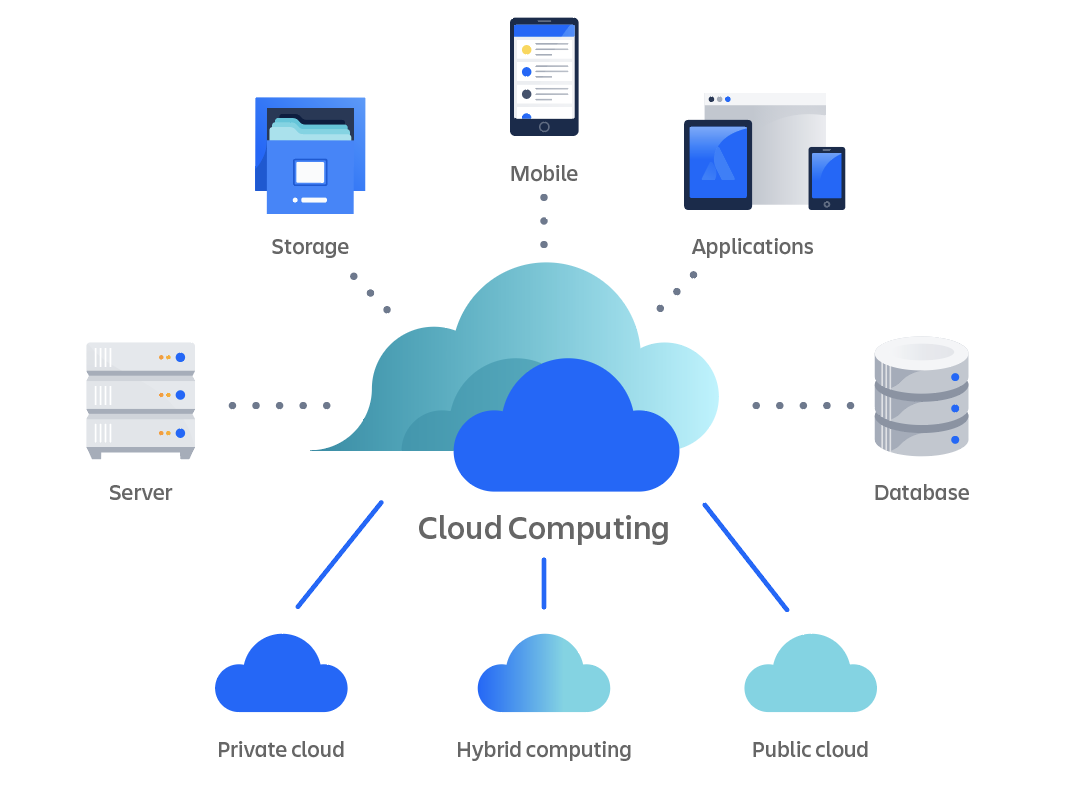
For many modern enterprises, the choice is no longer binary. The most pragmatic approach is often a Hybrid Cloud architecture.
In a hybrid setup, an organization uses on-premise servers to store its most sensitive, highly regulated, and consistently accessed intellectual property. This establishes a predictable, flat baseline cost. At the same time, the organization connects this private infrastructure to a public cloud provider to handle dynamic web traffic, temporary analytical workloads, and frontend application hosting. This provides the security of on-premise hardware with the elasticity of the cloud.
Conclusion: Aligning Infrastructure with Business Strategy
Ultimately, the choice between cloud and on-premise databases is not strictly a technical one; it is a business strategy decision. Startups optimizing for speed, growth, and minimal upfront risk should almost universally choose the cloud. Mature enterprises with highly predictable workloads, massive continuous data streams, and stringent compliance requirements will often find that repatriating their data to an on-premise data center yields significant long-term financial and security advantages.